

About Our Electric Transfer Carts
An electric transfer cart is a self-propelled flat car that moves heavy loads at floor level, between bays, between workshops or from one process to the next. It often works together with overhead and gantry cranes, which load and unload it at each end of the route.
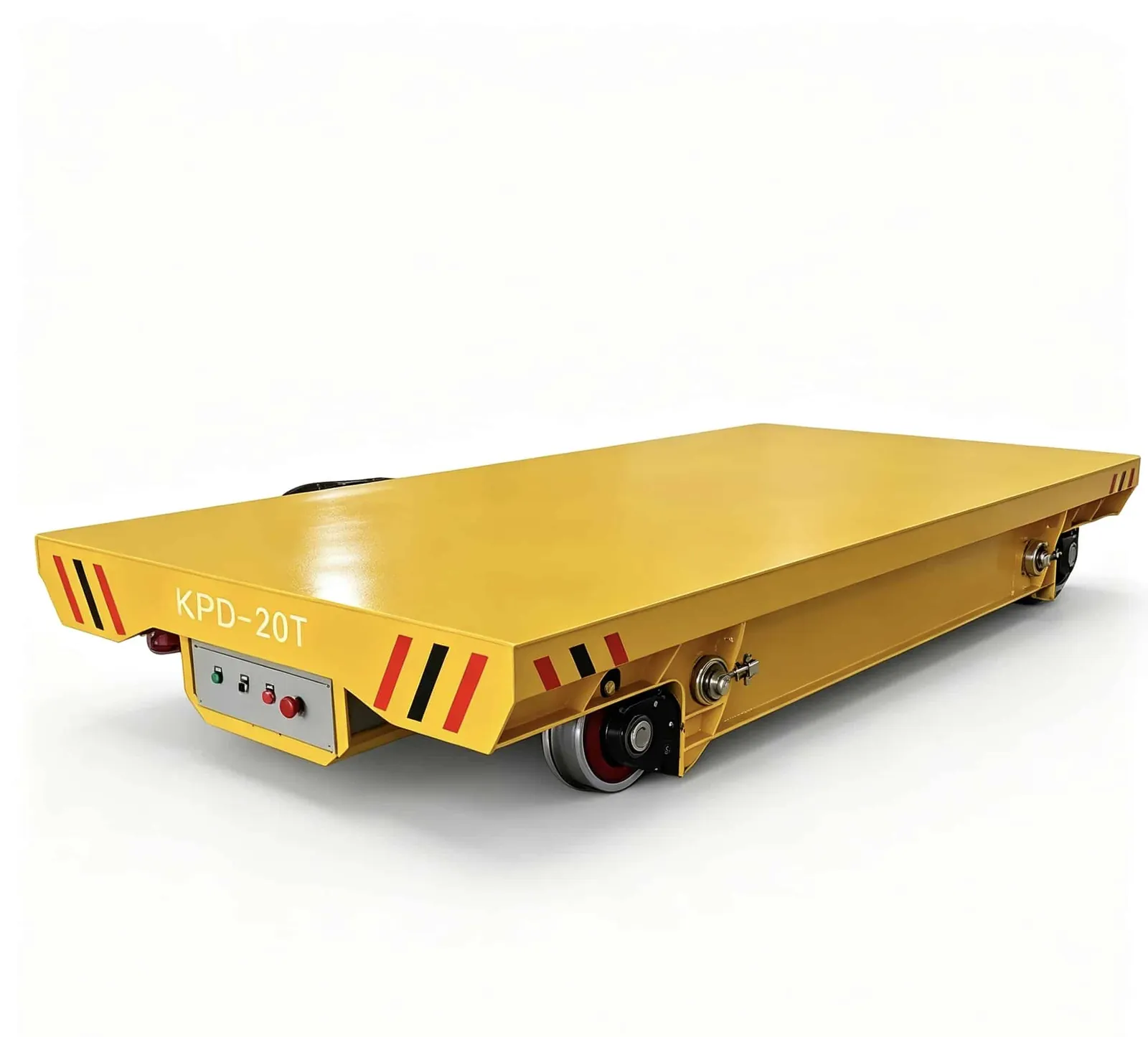
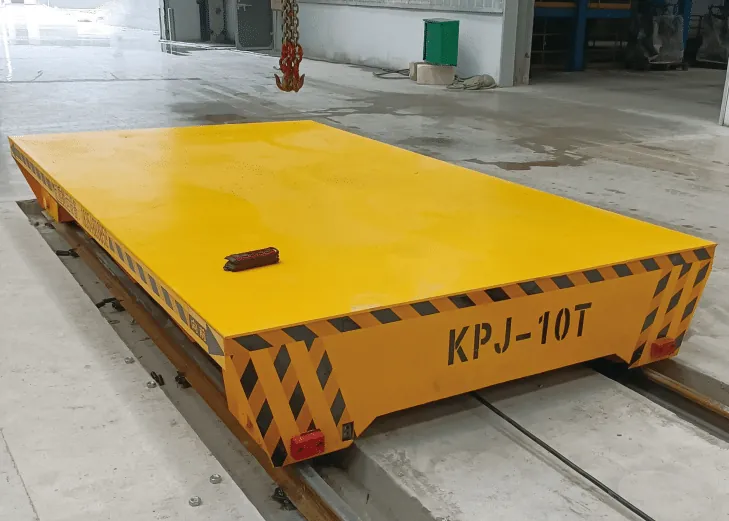
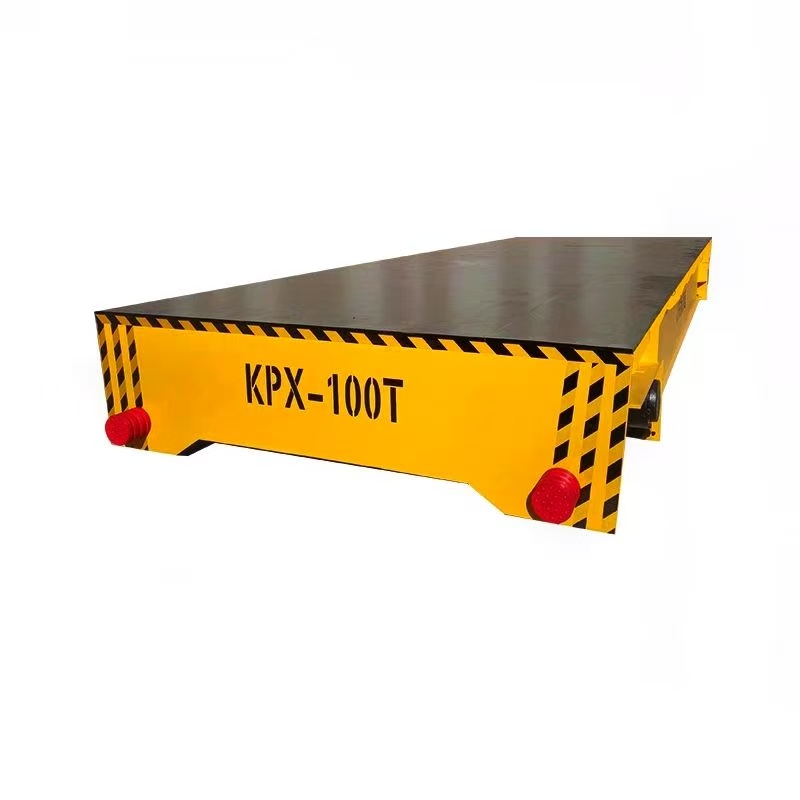
The range is defined by how the cart gets its power and whether it runs on rails. The KPX runs on rails from an on-board battery. The KPD takes low-voltage power through the rails themselves. The KPJ is fed through a cable reel. The KPW is a battery-powered trackless cart on polyurethane wheels that needs only a flat concrete floor, and the coil transfer cart carries steel and aluminum coils in a U-shaped cradle.
Whichever version suits the route, the cart itself is a simple, sturdy machine that is easy to maintain. It is driven by electric motors, which makes it clean and economical to run and simple to operate. Carts are built in our own workshops to the customer's requirement, including batch orders.
Choosing an Electric Transfer Cart
-
01
Rail or trackless A rail cart follows a fixed route. A trackless cart steers freely and suits routes that change or floors where rails cannot be laid.
-
02
Working hours A battery cart suits intermittent transport and needs time to charge. Carts powered through the rails or a cable reel can run continuously.
-
03
Distance and route Low-voltage rail power suits long, fixed routes, including curves and loops. A cable reel suits runs of limited length.
-
04
The load Tell us the weight, size and shape of the load. Coils, pipes and other round loads ride on anti-roll supports, and options such as hydraulic lifting are built to order.
-
05
Quotation Send the maximum load, the travel distance, the daily working hours and a sketch of the route. Our comparison of the KPX and KPD transfer carts explains the two most common choices.