• Home
  • Blog
  • Difference between KPX and KPD Transfer Trolley

Difference between KPX and KPD Transfer Trolley

Wondering how to pick the ideal lifting solution for your working demands? Let’s break down different types of electric hoists including HC, HM, CD and MD series, enabling precise, reliable performance for all your lifting operations.

Introduction

In manufacturing, metallurgy, port logistics and warehouse industries, stable and reliable heavy material transportation is essential for continuous production. Rail-mounted electric transfer trolleys are the most popular solution for moving steel coils, steel ingots, molds and bulk heavy goods.

KPX battery powered transfer trolley and KPD low-voltage rail powered transfer trolley are the two most common models. Many purchasers get confused when choosing between them. This article systematically compares power supply, installation cost, maintenance requirements and applicable working conditions of KPX and KPD transfer trolley, providing clear reference for equipment procurement.

Table of Contents

Overview of Power Supply Principle

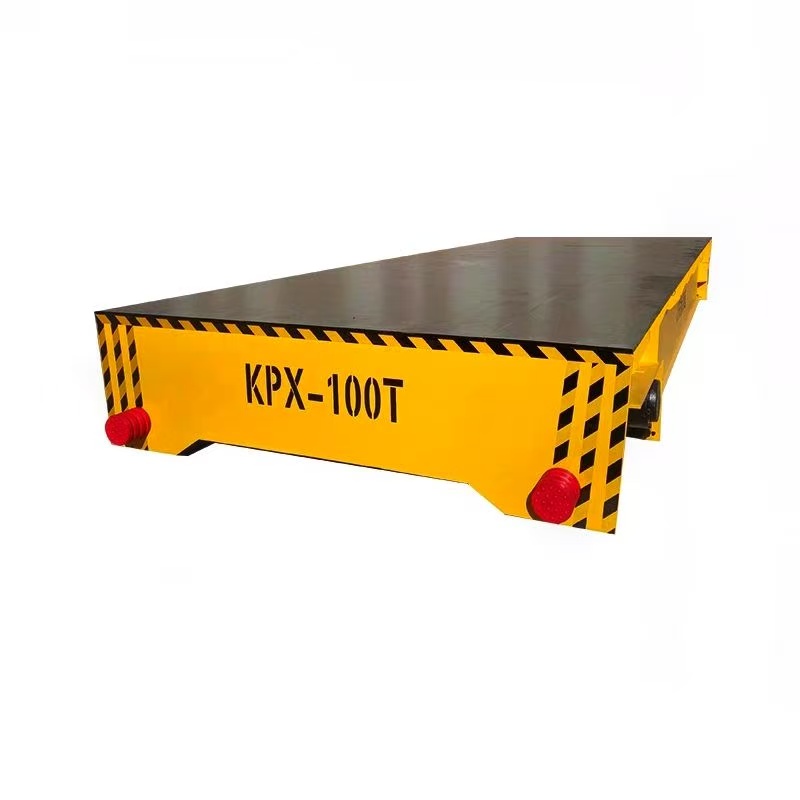
KPX Transfer Trolley (Battery Powered Rail Transfer Cart)

The KPX transfer trolley relies on built-in rechargeable battery as the independent power source. The storage battery supplies power directly to driving motors. No external power cables or conductive rails are required during operation. Once the battery power runs low, the trolley needs to stop working for offline charging.

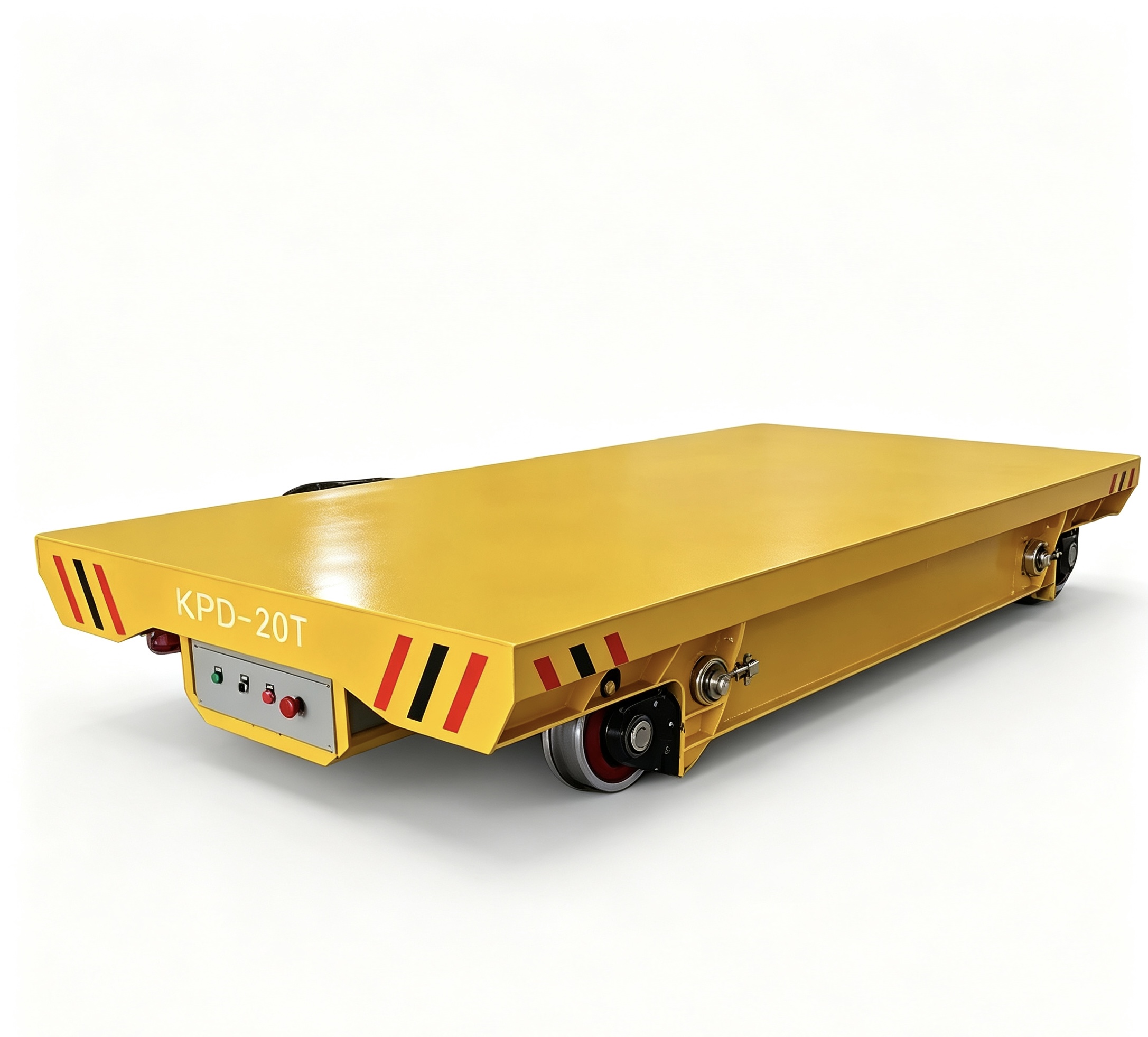
KPD Transfer Trolley (36V Low-Voltage Conductive Rail Transfer Cart)

The KPD trolley adopts a 36V safety low-voltage track power supply system. The two laid steel rails work as conductive tracks. An external ground transformer converts industrial alternating current into safe low voltage. Conductive brushes at the bottom of trolley contact the rails to obtain power, realizing unlimited continuous running without charging interruption.

Detailed Comparison Between KPX and KPD Transfer Trolley

1. Continuous Working Capacity

KPX: Working duration is limited by battery capacity. It supports intermittent transportation and needs regular charging breaks. Not suitable for nonstop 24-hour production lines.

KPD: There is no limitation on running time within the rail range. It can keep operating day and night to match uninterrupted production schedules.

2. Rail Installation Requirements & Construction Cost

KPX: Ordinary steel rails can be used. No special insulation construction for tracks. Initial infrastructure investment is low, easy for factories with limited budget.

KPD: The rails must complete insulation treatment to prevent electric leakage. Supporting transformers and cable layout are required, which brings higher construction cost and higher standard for foundation paving.

3. Safety Performance

KPX: Fully independent power system, no electrified rails. Lower risk of electric accidents. Friendly for workshops with frequent pedestrian activities.

KPD: The track carries 36V low voltage which is safe for human body in theory. However, regular inspection for track insulation joints is required to avoid hidden risks after long-term wear.

4. Daily Maintenance Cost

KPX: Batteries are consumable parts. Batteries need to be replaced every several years, generating periodic replacement costs. Other mechanical maintenance is simple.

KPD: No battery consumption. Main maintenance focuses on conductive brush wear inspection and track insulation testing, lower long-term operating expense for long-running workshops.

Recommended Application Scenarios

Choose KPX Transfer Trolley if you meet below conditions:

  • Intermittent material transportation, no demand for 24-hour continuous operation
  • Medium and short transport distance inside the workshop
  • Hope to reduce early track construction budget
  • Workshops with dense staff flow, pursuing simple safety management
  • Possible adjustment of transport routes in the future

Choose KPD Transfer Trolley if you meet below conditions:

  • Round-the-clock continuous production line with nonstop cargo handling
  • Fixed long-distance rail transportation layout
  • Long-term stable production planning, no frequent track reconstruction
  • Want to avoid periodic battery replacement costs

Comparison Table

Item KPX Transfer Trolley KPD Transfer Trolley
Power Source On-board rechargeable battery 36V low voltage conductive rail
Continuous Operation Limited, requires charging pause Unlimited, 24h continuous available
Rail Requirement Common rail, no insulation needed Rail needs professional insulation treatment
Initial Construction Cost Low Relatively High
Main Consumables Traction battery Conductive brush
Suitable Distance Short & medium distance transport Fixed short / long distance transport

Conclusion

There is no absolute superior model between KPX and KPD transfer trolley. The optimal solution depends on your factory’s production rhythm, transport route length, budget and long-term operation plan.

If you are confused about model selection, provide your maximum loading weight, daily working hours, transportation distance and track layout requirements. Kitanano engineering team can offer customized electric transfer trolley layout plan and official quotation.

Comments
Great things in business are never done by one person. They’re done by a team of people. We have that dynamic group of peoples
Scroll to Top

Get the quote

Fill out the form below, and we will be in touch shortly.