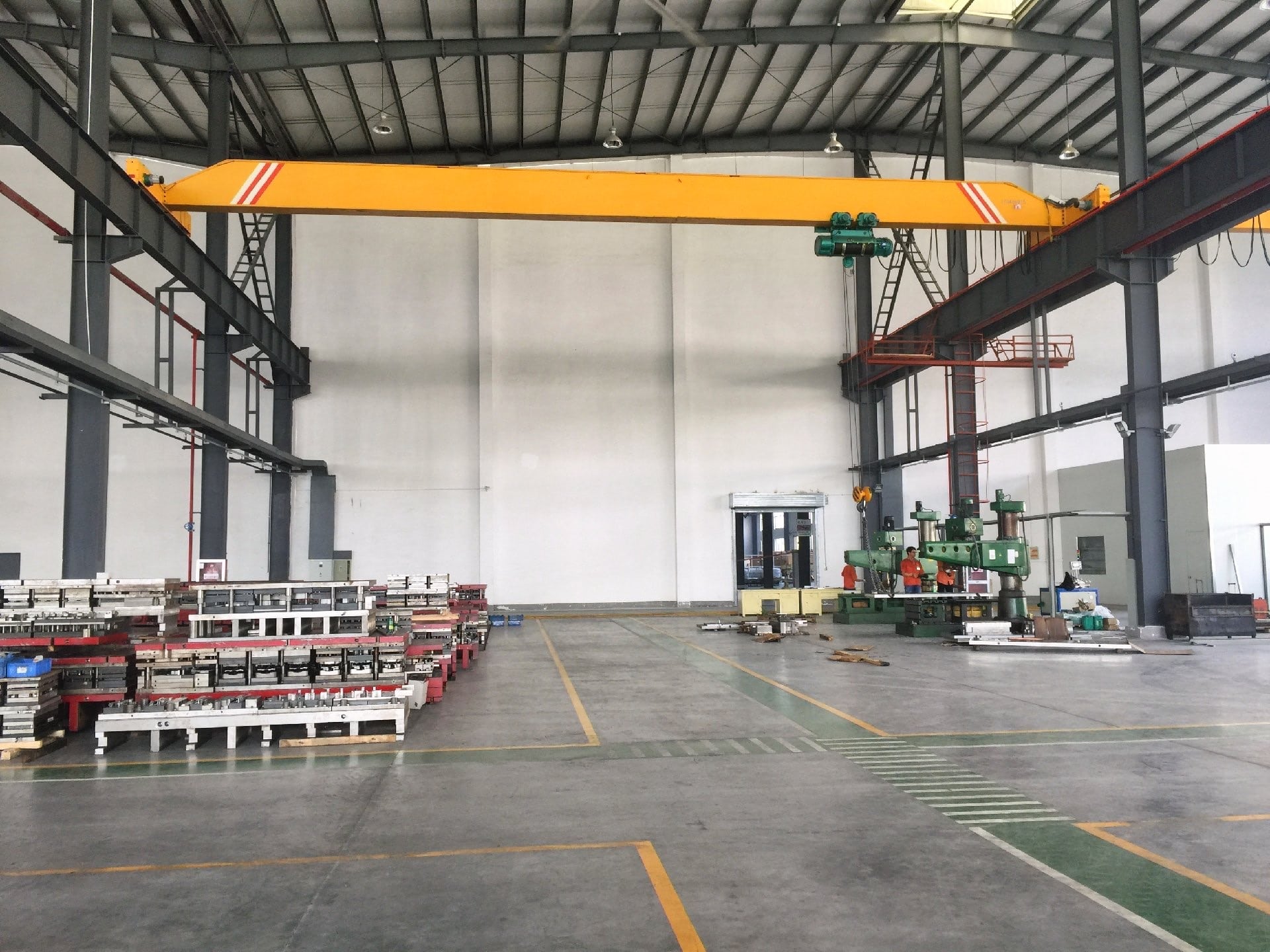
Operators control it via wired pendants, wireless remotes or built-in operator cabins. It is widely used for material handling, loading and unloading in factories, yards, railway stations and ports.
The History and Progress of Lifting Technology
The legacy of the crane stretches back to antiquity, when early builders engineered basic pulley setups to hoist massive stone blocks. Century after century, engineering breakthroughs and automation have driven crane innovation forward, drastically increasing how much weight they can carry and expanding where they can be used. Today, that evolution continues as manufacturers integrate smart tech and automated controls into modern fleets.
Two Core Advantages of Overhead Cranes
Higher Space Utilization & Efficiency
It utilizes unused ceiling space to free up ground area for production lines. It finishes material handling far faster than ground lifting equipment.
When handling molten metal, toxic chemicals or dangerous goods, operators stay far from loads to greatly lower injury risks.
Main Components
-
01
Bridge Girders & End Trucks The load-bearing bridge girder is customized by workshop width and lifting tonnage. End trucks with wheels carry the whole bridge to slide along runways.
-
02
Hoist (Lifting Core) Chain hoists: For loads under 10 tons, precise vertical lifting for compact spaces. 3. Wire rope hoists: For 10+ tons heavy-duty work, fast lifting and long service life. Trolley & Driving System The trolley moves the hoist across the girder. VFD drives deliver smooth operation and eliminate load sway.
-
03
Power & Control Systems Power is supplied via conductor bars or festoon cables. Operators use simple push buttons or smart wireless remotes with real-time load displays.
Common Overhead Crane Types
- Single Girder Crane
- Lightweightlow-costideal for light loadslow headroom workshops
- Double Girder Crane
- Heavy-duty design with maximum hook heightfor high-capacity frequent use
- Gantry Crane
- Self-supporting leg structureno roof support neededsuitable for outdoor yards
- Monorail Crane
- Single I-beam trackperfect for linear assembly line transport
- Jib Crane
- Rotatable pillar/wall-mounted armauxiliary lifting for independent workstations
Key Terms for Purchase
Rated Lifting Capacity: Certified maximum safe lifting weight
Span: Distance between two runway rail centerlines
- CMAA/ISO Work Class
- Graded by daily operation frequencyload weight
Wheel Load: Maximum pressure on rails under full load (for building reinforcement check)
- Explosion-Proof Rating
- Required for chemical plantsrefineries with flammable substances
Industrial Applications
Overhead cranes are essential for multiple industries:
Automotive plants transfer chassis and stamping dies; steel mills carry molten metal and steel coils; precast factories move construction components. Logistics, power plants, paper and food factories also rely on customized overhead cranes for smooth production.