What is an Overhead Crane?
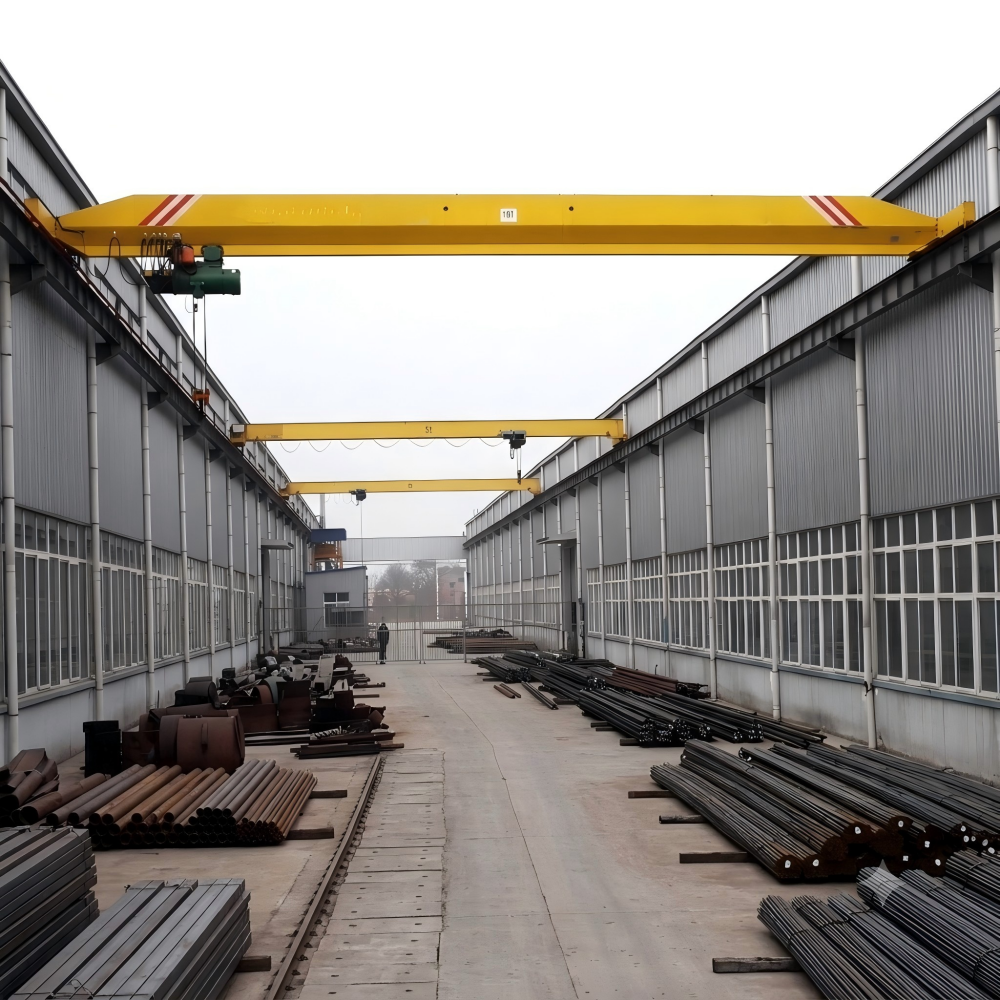
An overhead crane is an overhead lifting machine for moving heavy loads across the 3D rectangular space inside workshops. Unlike forklifts, it works suspended in the air with powerful lifting capacity and wide coverage.
Operators control it via wired pendants, wireless remotes or built-in operator cabins. It is widely used for material handling, loading and unloading in factories, yards, railway stations and ports.
The History and Progress of Lifting Technology
The legacy of the crane stretches back to antiquity, when early builders engineered basic pulley setups to hoist massive stone blocks. Century after century, engineering breakthroughs and automation have driven crane innovation forward, drastically increasing how much weight they can carry and expanding where they can be used. Today, that evolution continues as manufacturers integrate smart tech and automated controls into modern fleets.
Two Core Advantages of Overhead Cranes
Higher Space Utilization & Efficiency
It utilizes unused ceiling space to free up ground area for production lines. It finishes material handling far faster than ground lifting equipment.
Better Workplace Safety
When handling molten metal, toxic chemicals or dangerous goods, operators stay far from loads to greatly lower injury risks.
How Overhead Cranes Work
The crane moves along three axes: longitudinal forward/back travel, side-to-side cross travel, and vertical hoist lifting.
Its main structure includes fixed runway beams, sliding end trucks, a spanning bridge girder, and a trolley fitted with a hoist. Coordinating these three movements allows precise load placement anywhere in the working area.
Main Components
1.Bridge Girders & End Trucks
The load-bearing bridge girder is customized by workshop width and lifting tonnage. End trucks with wheels carry the whole bridge to slide along runways.
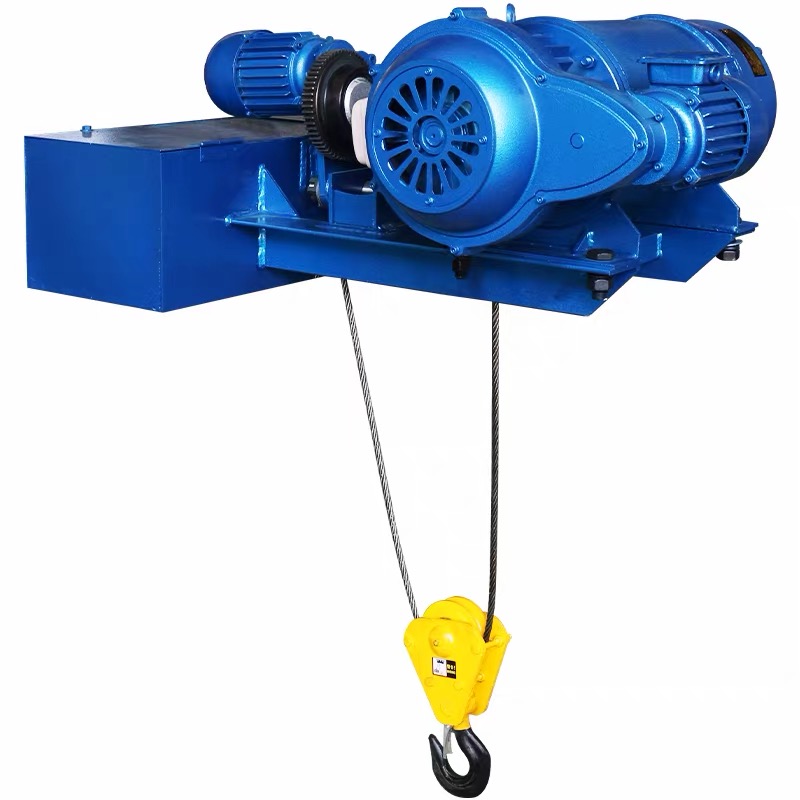
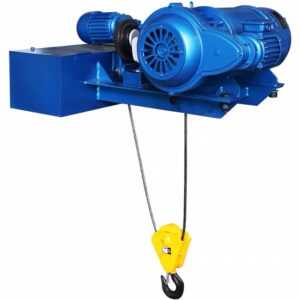
2.Hoist (Lifting Core)
Chain hoists: For loads under 10 tons, precise vertical lifting for compact spaces.
3.Wire rope hoists: For 10+ tons heavy-duty work, fast lifting and long service life.
Trolley & Driving System
The trolley moves the hoist across the girder. VFD drives deliver smooth operation and eliminate load sway.
4.Power & Control Systems
Power is supplied via conductor bars or festoon cables. Operators use simple push buttons or smart wireless remotes with real-time load displays.
Common Overhead Crane Types
Single Girder Crane: Lightweight, low-cost, ideal for light loads and low headroom workshops.
Double Girder Crane: Heavy-duty design with maximum hook height, for high-capacity frequent use.
Gantry Crane: Self-supporting leg structure, no roof support needed, suitable for outdoor yards.
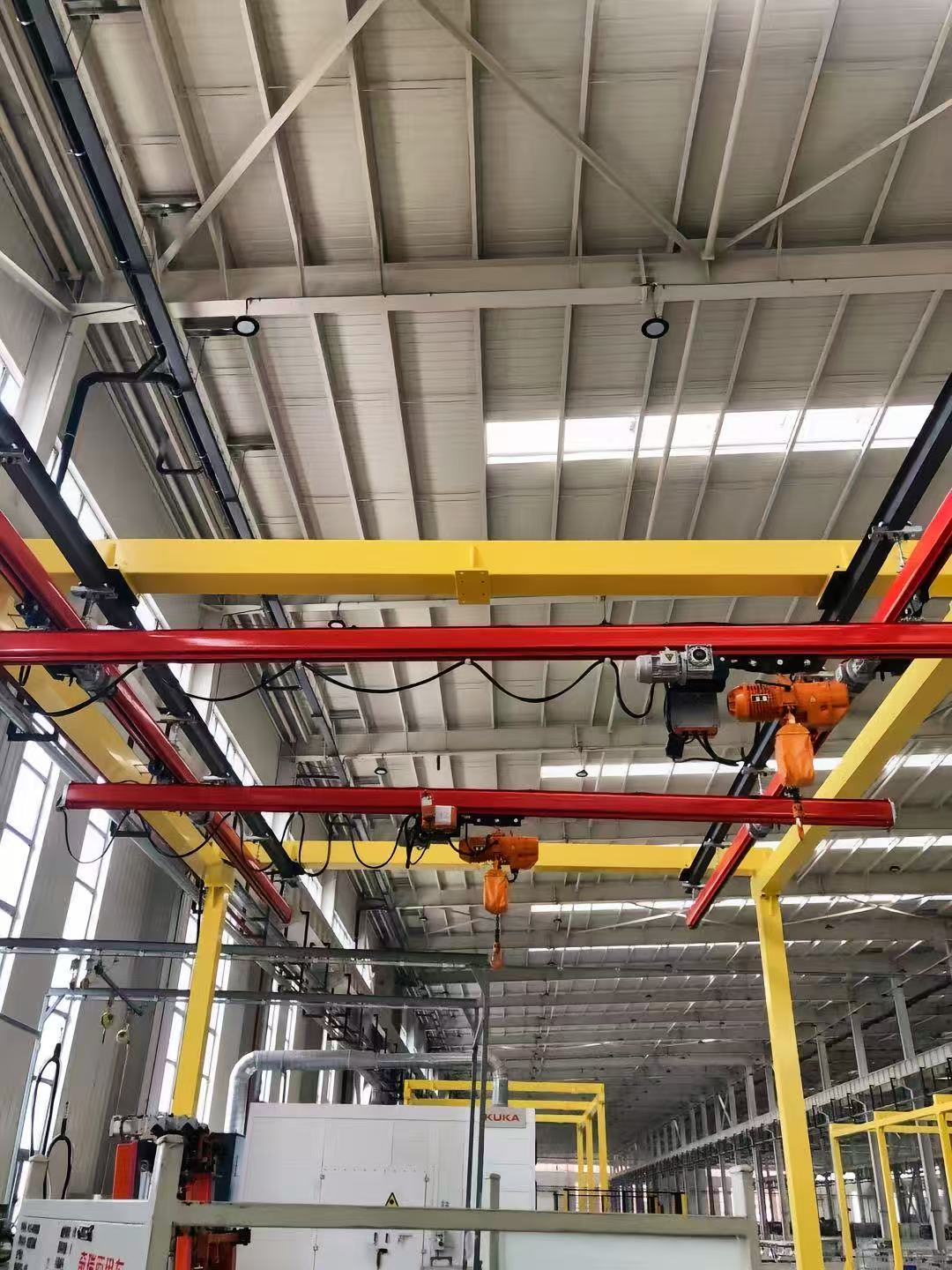
Monorail Crane: Single I-beam track, perfect for linear assembly line transport.
Jib Crane: Rotatable pillar/wall-mounted arm, auxiliary lifting for independent workstations.
Key Terms for Purchase
Rated Lifting Capacity: Certified maximum safe lifting weight
Span: Distance between two runway rail centerlines
CMAA/ISO Work Class: Graded by daily operation frequency and load weight
Wheel Load: Maximum pressure on rails under full load (for building reinforcement check)
Explosion-Proof Rating: Required for chemical plants, refineries with flammable substances
Industrial Applications
Overhead cranes are essential for multiple industries:
Automotive plants transfer chassis and stamping dies; steel mills carry molten metal and steel coils; precast factories move construction components. Logistics, power plants, paper and food factories also rely on customized overhead cranes for smooth production.
Conclusion
Whether navigating the tight confines of a factory floor with an overhead system, scaling new heights with a tower crane, or deploying rapidly with a mobile fleet, choosing the right crane is essential for any heavy-duty project. By understanding the distinct advantages, applications, and mechanical components of each type, industries can optimize their workflows, safeguard their personnel, and successfully manage even the most demanding material handling tasks.
Comments